
Mastering Practical Solar PV Design Using SketchUp & Pvsyst
Professional Course
Overview
Course Overview & Objectives
Designing a high-performing solar photovoltaic plant requires more than just dropping modules onto a layout. It demands a rigorous understanding of site constraints, precise 3D modeling, and advanced simulation to mitigate shading losses and optimize energy yield.
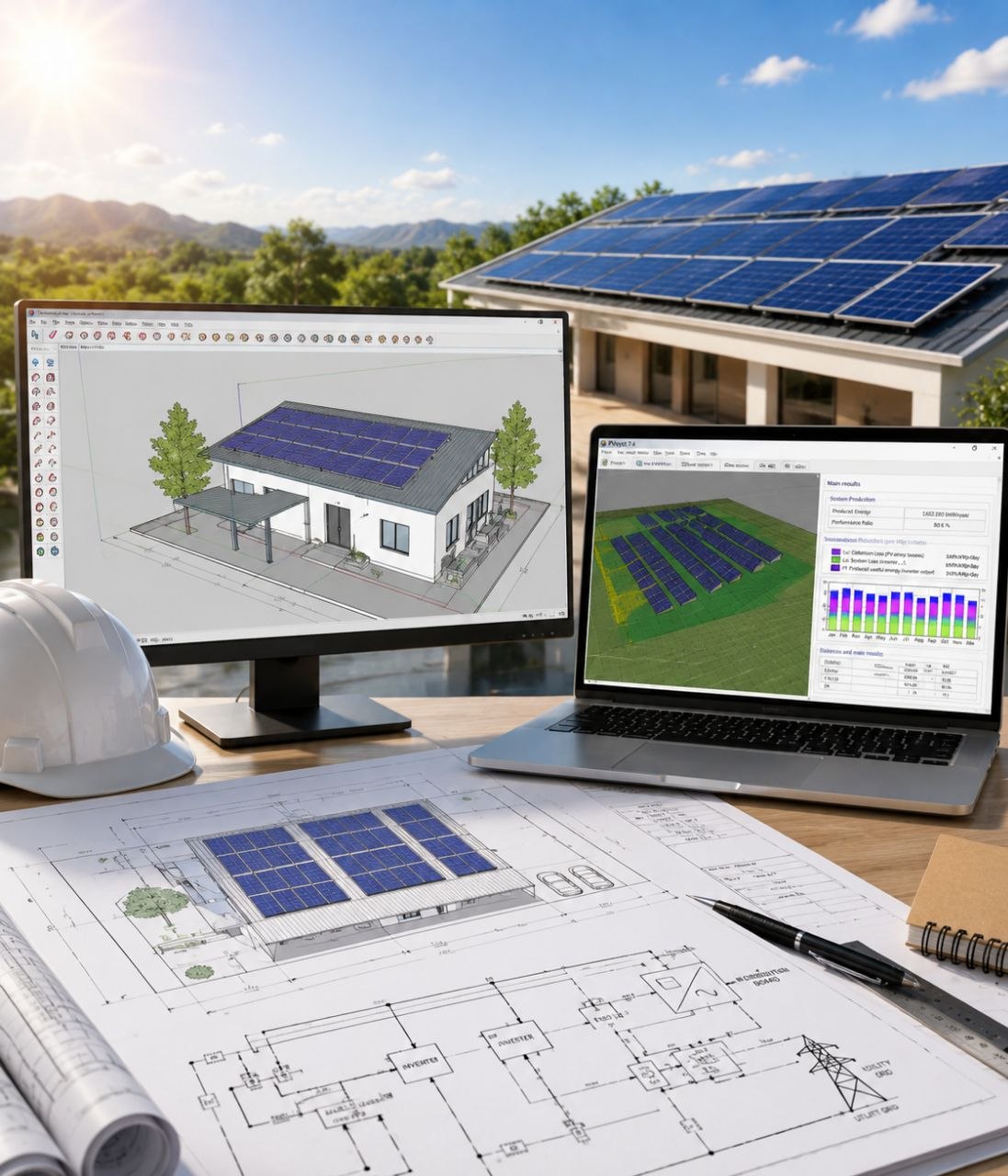
This comprehensive course takes you step-by-step through the entire design lifecycle—from foundational solar geometry and site assessment to advanced 3D shading analysis and integrated workflows using AutoCAD, SketchUp, and PVsyst.
Key Modules Breakdown
Module 1: Solar Energy Fundamentals
Core solar energy basics and types of solar systems (PV, CSP, thermal)
Irradiance concepts (kW/m2, peak sun hours) and radiation types (direct, diffuse, reflected)
Global Horizontal Irradiation (GHI) and Direct Normal Irradiation (DNI) measurement tools, including pyranometers
Module 2: Solar Geometry & System Design Basics
Sun path mechanics and seasonal movement
Solar noon, azimuth angle, altitude angle, tilt, and optimal orientation
Module 3: Solar Site Analysis
Online assessment methodologies (Google Earth, surrounding topography)
Layout understanding, local site inspection, and critical site constraints
Practical software application using SunCalc for site evaluation
Module 4: Introduction to Shading & Impact
Defining shading, why it is critical, and its direct impact on PV production
Module 5: Types of Shading (Part 1)
Temporary shading, location-based constraints, building shading, and mitigation basics
Module 6: Types of Shading (Part 2 – Critical Types)
Self-shading (interrow shading) and direct shading
Energy loss impact and engineering design considerations
Module 7: Advanced Shading & Field Tools
SunEve, Sun Path Finders, and field measurement instrumentation
Module 8: Practical Shading Analysis Workflow (AutoCAD → SketchUp → PVsyst)
Preparing 2D PV layouts using AutoCAD
Developing 3D models and simulating shading scenarios in SketchUp
Performing advanced shading analysis and calculating energy losses in PVsyst
Evaluating simulation results to identify critical shading impacts and applying design optimization (layout, spacing, and tilt) to minimize losses
Who This Is For
Solar Engineers & Designers seeking to master industry-standard simulation and 3D modeling tools.
EPC Professionals & Project Managers wanting deeper technical insight into energy yield optimization and loss mitigation.
Engineering Students & Practitioners aiming to gain hands-on, practical competency in utility and commercial PV system design.
Curriculum
Instructor

You May Like

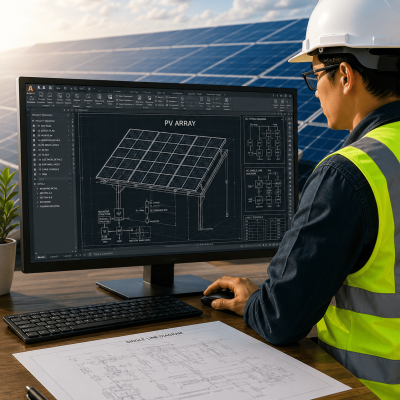

Certified Solar PV Electrical Drawing Design Course
Professional Course

Course Features
- Lecture 0
- Quiz 0
- Duration 10 weeks
- Skill level All levels
- Language English
- Students 3
- Certificate No
- Assessments Yes